
Written on 24 October 2026 from Polish encyclopaedias, the biography read at Wiktorówki on 30 May 2026 and the other sources listed at the end. A longer Polish version is on our Polish blog.
- Who: one of the best Polish climbers of the 1930s, nicknamed "Pstruś" (roughly "little trout").
- Climbing: over 150 rock routes in the Tatras, several first ascents, peaks in the Alps, the Rwenzori and on Kilimanjaro.
- War: crossed the Tatras on foot in 1940, fought with the Polish army at Tobruk (wounded twice) and Monte Cassino.
- Rescue: head of the Tatra rescue service TOPR 1947–1954 and first head of GOPR, 205 rescue operations in charge.
- Where to remember him: his grave at the Old Cemetery in Zakopane and a plaque at the Wiktorówki chapel, unveiled in May 2026.
Walk through the Old Cemetery in Zakopane, or stop at the little wooden chapel at Wiktorówki on the way to Morskie Oko, and you will meet the name Pawłowski. Tadeusz Aleksander Pawłowski belonged to the generation that made the Tatras what they are for Poles today: a place of climbing, of risk, and of people who go out in any weather to bring others down alive. His life also follows the history of 20th-century Poland almost step by step.
Life and family
- Born
- 22 November 1910, Warsaw
- Died
- 17 April 1992, Zakopane
- Nickname
- "Pstruś"
- Buried
- Old Cemetery, Pęksowy Brzyzek, Zakopane
- Education
- MSc in chemistry (1938)
- Army rank
- Second lieutenant, 3rd Carpathian Rifle Division
He was born in Warsaw and spent part of his school years in Lwów (today Lviv in Ukraine). After his father Maksymilian died, his mother Jadwiga moved to Zakopane and took a job at a guest house. Tadeusz finished school at the Zakopane secondary school known as "Liliana" in 1930.
He began studying in Warsaw, paying his way with private lessons, then moved to Kraków. A scholarship of 100 złoty a month from 1933 let him finish, and in 1938 he graduated in chemistry.
On the day the Second World War broke out he married Janina Klimińska. Their son Marek Pawłowski later ran the Roztoka mountain hut for many years. With his second wife Irena he had a daughter, Anna Wende-Surmiak, who became director of the Tatra Museum in Zakopane.
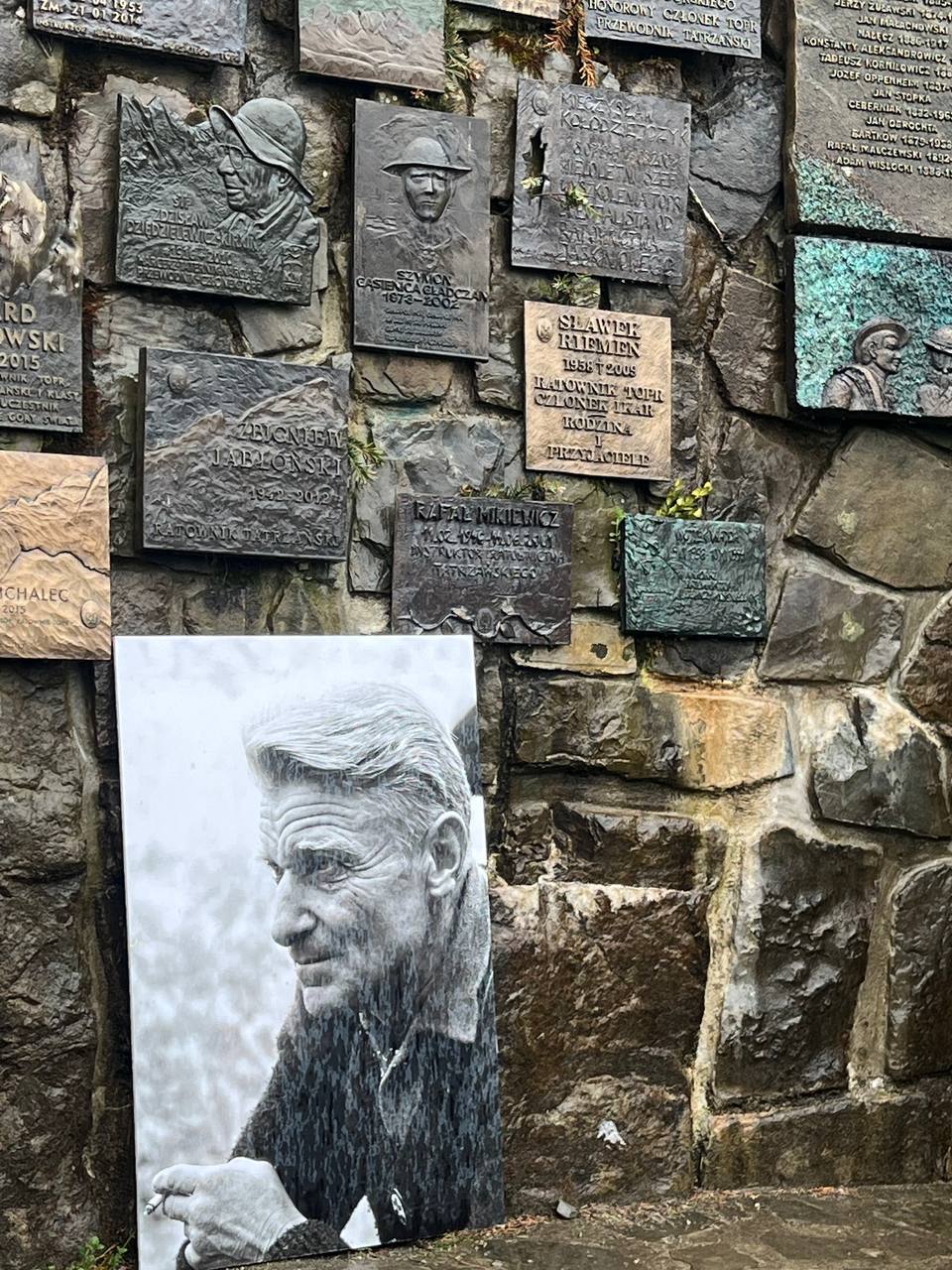
Climbing in the Tatras and beyond, 1926–1939
He started climbing in 1926, still at school. Two classmates at "Liliana", Stanisław Motyka and Jan Gnojek, and Jan Sawicki from the year below, became his first climbing partners. As a student he climbed with the best Polish climbers of the time, among them Zofia Radwańska-Kuleszyna, the skier Bronisław Czech and Tadeusz Bernadzikiewicz.
Between 1929 and 1939 he was at the very top of Polish climbing. He climbed more than 150 rock routes in the Tatras, including all of the hardest ones known at the time, and made several first ascents:
| Year | Route |
|---|---|
| 1930 | North face of Lodowy Zwornik (first ascent) |
| 1930 | North-east face of Pośredni Gierlach (first ascent) |
| 1932 | Right-hand pillar of the east face of Rysy (first ascent) |
| 1936 | Central part of the south face of Mały Lodowy Szczyt (first ascent) |
| 1937, winter | Pośrednia Śnieżna Turnia from Ścienki pass (second winter ascent) |
| 1937, winter | North-east ridge of Kriváň (second winter ascent) |
In 1937 and 1938 he went to the Alps with the Polish High Mountain Club. With Kuleszyna and Jan Staszel he traversed Mont Blanc and then climbed the Aiguille Verte.
In December 1938 he joined a Polish expedition to the Rwenzori, the "Mountains of the Moon" on the border of Uganda and Congo. With Bernadzikiewicz he reached several summits, including Margherita Peak, the highest point of the range, and climbed Albert Peak by a new route and an unclimbed summit of about 4,500 m. Alone, he went up Kilimanjaro to about 5,600 m. He was planning a Himalayan expedition next. The war ended that plan.
In the summer of 1939 he took over the climbing school of the High Mountain Club at Hala Gąsienicowa, the high meadow above Zakopane where Polish climbers have trained for over a century.
The war years, 1939–1947
When Germany invaded Poland, Pawłowski and his friend Włodzimierz Gosławski ran the Roztoka mountain hut near Morskie Oko. Until February 1940 it was a waypoint for Poles escaping south over the Tatras to Hungary and on to the Polish army forming in France. In March 1940 both men had to go into hiding from the Gestapo.
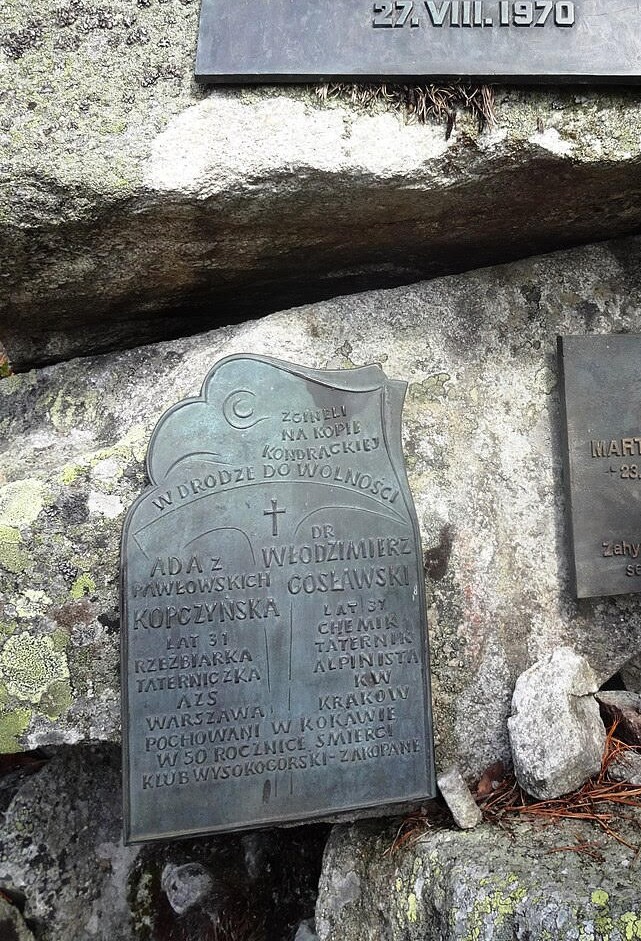
Gosławski tried to cross the mountains together with Tadeusz's sister, Ada Kopczyńska. Both died of exhaustion on the slopes of Cicha Valley in the spring of 1940. A plaque to Ada now stands at the Symbolic Cemetery below Ostrva on the Slovak side of the Tatras.
In April 1940 Tadeusz crossed the border with the climber Jerzy Włoczkowski, over the high passes of Zawrat, Gładka Przełęcz and Zawory and then the Low Tatras into Hungary. From there he travelled through Yugoslavia, Turkey and Palestine to the Polish Army in the Middle East.
He fought in the siege of Tobruk in Libya, on Hill 209, where he was wounded twice. He received the Cross of Valour, Poland's decoration for bravery in battle.
In Palestine he finished officer school. From 1942 he served in a mortar platoon of the 3rd Carpathian Rifle Division, part of General Anders' Polish II Corps, together with another climber, Ludwik Januszewicz. While the division trained in Iraq, the two of them organised mountain camps in the Zagros Mountains: in July 1943 they climbed ten peaks over 3,000 m, including the highest, Halewar (3,725 m).
Promoted to second lieutenant in 1944, he commanded a mortar platoon through the Italian campaign: Monte Cassino (Hill 593), Loreto and Ancona. After the war he was demobilised in Britain and returned to Poland in May 1947. Many soldiers of Anders' army chose not to go back to communist Poland. He went home to the mountains.
Even in uniform he kept climbing: in Lebanon (1942), in Kurdistan (1943), in the Apennines (1945) and in the Alps (1946).
Mountain rescue: TOPR and GOPR
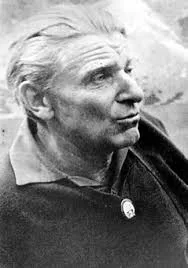
TOPR, the Tatra Volunteer Rescue Service, was founded in Zakopane in 1909 and is one of the oldest mountain rescue services in the world. Pawłowski had joined rescue missions before the war, under the legendary rescuer Józef Oppenheim, but he took the rescuer's oath only in June 1947. Two months later he was head of TOPR, a post he held until 1954.
Some of them are still talked about in Zakopane: the search for Andrzej Nunberg and Jerzy Woźniak on Rumanowy Szczyt, the recovery of Tadeusz Strumiłło and Henryk Czarnocki, killed by an avalanche, and the 1956 avalanche in Goryczkowa Valley that buried five people.
In 1952 he was one of the main founders of GOPR, the Mountain Volunteer Rescue Service, which brought rescue in all Polish mountain ranges into one organisation. He led it for five terms until 1958 and stayed on its board until 1968, representing Poland at the International Commission for Alpine Rescue (IKAR). In retirement he founded the GOPR seniors' club, and in 1972 he was made an honorary member.
He was also a first-class Tatra mountain guide from 1949, helped set up the Zakopane guides' association, and from 1963 to 1966 ran the Ornak hut in Kościeliska Valley, which many of our guests walk to today. He kept climbing into old age: the Caucasus (1965), Mount Ararat in Turkey (1969), the Sierra Nevada (1977), the Julian Alps and the Dolomites (1980).
TOPR still runs rescue in the Polish Tatras, and it is free of charge. If you need help on a trail, call 985 or +48 601 100 300, or use the Ratunek app, which sends your position. 112 works too.
Writing
From 1932 he wrote about climbing and rescue for Polish mountain magazines such as Taternik and Wierchy. He was one of three anonymous authors of Tatapiernik (1932), a satirical parody of Taternik. With Zofia Radwańska-Kuleszyna he published Skalne drogi w Tatrach Wysokich ("Rock routes in the High Tatras", 1938), a climbing guide supplement, and he co-wrote Sygnały z gór ("Signals from the mountains", 1973), the book for the 60th anniversary of Tatra rescue.
Honours
Polish military
- Cross of Valour (twice)
- Monte Cassino Commemorative Cross
British military
- Africa Star
- Italy Star
- 1939–1945 Star
Polish state
- Knight's Cross of the Order of Polonia Restituta
- Gold Cross of Merit
Honorary membership
- GOPR (1972)
- Polish Mountaineering Association
- Horská služba, the Czechoslovak mountain rescue
- High Mountain Club, Zakopane
- Klimek Bachleda Tatra Guides' Circle
The plaque at Wiktorówki, 30 May 2026
Wiktorówki is a small wooden sanctuary in the forest of the High Tatras, about 1,200 m up, near the Rusinowa Polana meadow. It is the chapel of Tatra guides and rescuers, and its walls are covered with plaques to people who died in the mountains.
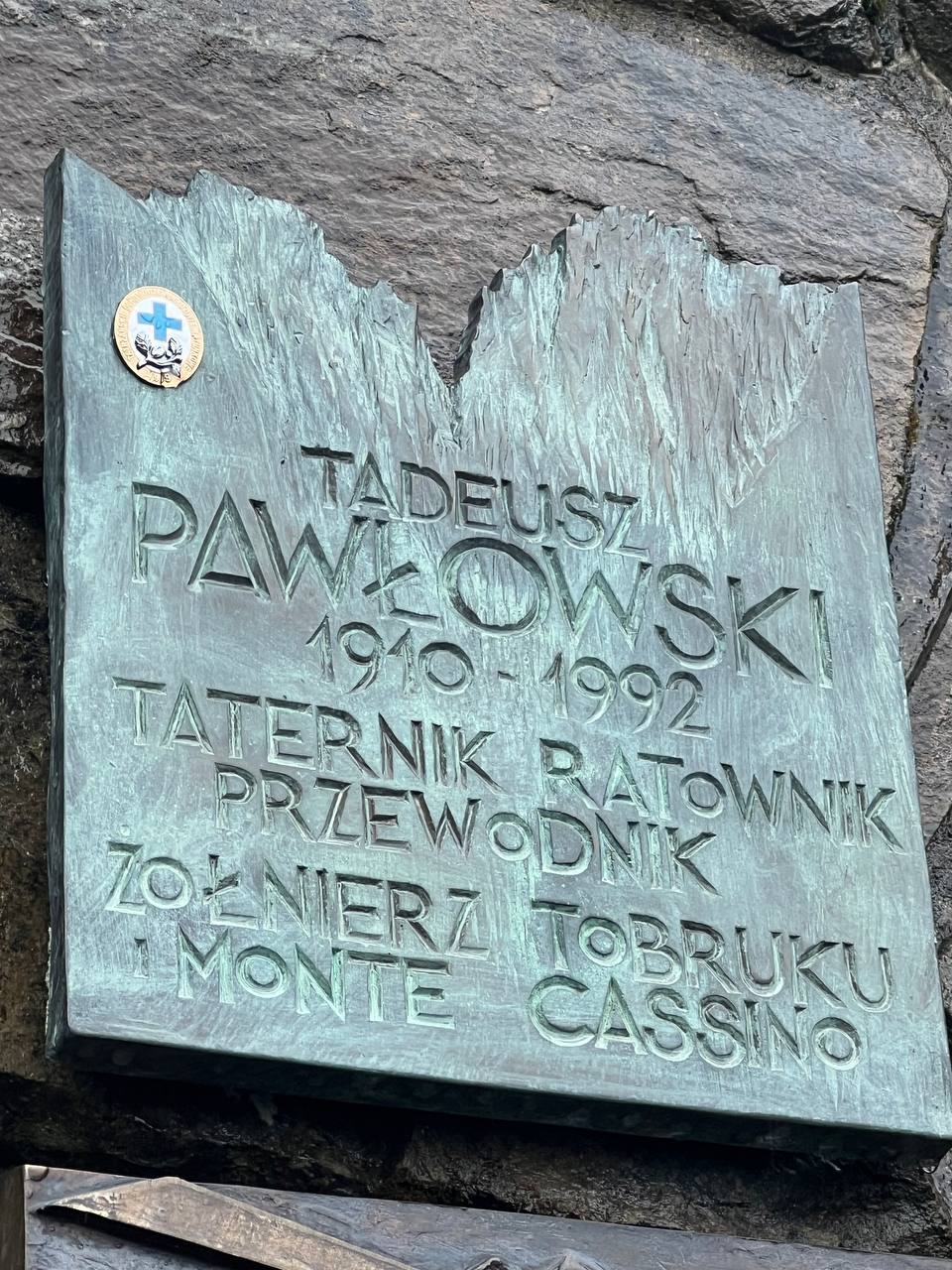
On Saturday 30 May 2026, the 34th anniversary of his death, a plaque to Tadeusz Pawłowski was unveiled there. After the midday Mass, the TOPR rescuer and guide Apoloniusz Rajwa read his full biography to the people gathered. As he reminded them, the funeral in 1992 had been modest: only two years after the fall of communism, there had been no proper way to honour a soldier of Anders' army. The ceremony in 2026 closed that gap.
Report on Facebook
Open on FacebookApoloniusz Rajwa's speech on YouTube
Watch on YouTubePlaces to visit in his footsteps
- The Old Cemetery at Pęksowy Brzyzek, Kościeliska Street, next to the old wooden church. His grave is here among painters, writers, climbers and rescuers. A few minutes' walk from the top of Krupówki.
- Wiktorówki, the chapel with his plaque. It is a forest walk of about an hour uphill from the road to Morskie Oko, inside the national park, so the park ticket (11 PLN) applies. Combine it with the view from Rusinowa Polana, one of the best panoramas of the High Tatras.
- The Roztoka hut on the way to Morskie Oko, which he ran in 1939 and 1940 and his son ran for decades. See our Morskie Oko guide.
- The Ornak hut at the end of Kościeliska Valley, which he ran in the 1960s. An easy walk for the whole family.
- The Tatra Museum on Krupówki, the best place in town to understand the history of the mountains and the people who lived with them.
Questions we often get
Who was Tadeusz Pawłowski "Pstruś"?
A leading Polish climber of the 1930s, a soldier at Tobruk and Monte Cassino, head of the Tatra rescue service TOPR from 1947 to 1954, and a founder and the first head of GOPR.
What are TOPR and GOPR?
TOPR is the mountain rescue service of the Polish Tatras, founded in 1909. GOPR covers the other Polish mountains. From 1952 to 1991 the Tatra service worked as part of GOPR, which Pawłowski helped create.
Where is he buried?
In the Old Cemetery at Pęksowy Brzyzek on Kościeliska Street in Zakopane.
Where is the memorial plaque?
At the Wiktorówki chapel in the High Tatras, near Rusinowa Polana. It was unveiled on 30 May 2026.
Why the nickname "Pstruś"?
"Pstruś" is an affectionate Polish form of "pstrąg", a trout. The sources we used do not say how he got it, and we would rather not guess.
Sources: Wielka Encyklopedia Tatrzańska (z-ne.pl), Polish Wikipedia, ratownictwogorskie.eu, SKI Magazyn, 24tp.pl, E. Moskała, Schronisko PTTK im. Wincentego Pola w Roztoce, memories of Janina Pawłowska, the biography read by Apoloniusz Rajwa at Wiktorówki on 30 May 2026, M. Jagiełło, "Człowiek gór" (Życie Warszawy, 1974), A. Puškáš in Tatry 1/1993, Sygnały z gór (Warsaw, 1973).
Willa Storczyk · Zakopane
Stay where the story happened
Family-run rooms from 100 PLN (about 23 EUR) per person per night, a short walk from the Old Cemetery and Krupówki, with a bus towards Morskie Oko and Wiktorówki from the town centre.
Check availability